OCCUPATION
What they did
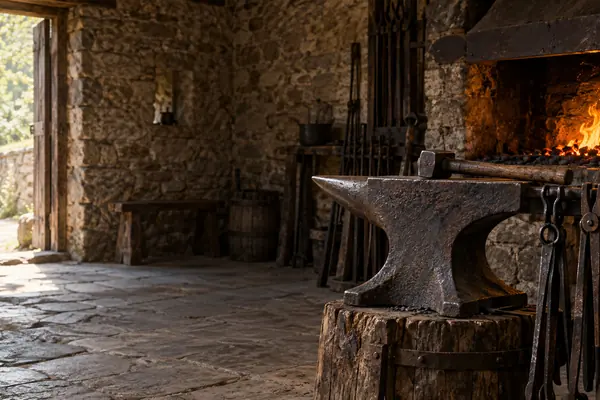
Smith and Baker are obvious. Others are fossils of lost words: Wright and Chandler, or Baxter and Rutter. Status names like Knight and Squire count here too.
When names stuckA PLAIN-ENGLISH GUIDE TO SURNAMES
Before surnames, people were told apart by what they did, where they lived, whose child they were, or what they were like.
Researchers sort British and Irish surnames into four broad kinds: occupational like Smith, locative like Hill, relationship names like Jackson, and nicknames like Brown or Short. Over centuries, these descriptions became names passed down in families.
45,600 family names explained
THE SHORT ANSWER
Four kinds of surname,
from the Middle Ages to today.
OCCUPATION
Smith and Baker are obvious. Others are fossils of lost words: Wright and Chandler, or Baxter and Rutter. Status names like Knight and Squire count here too.
When names stuckPLACE
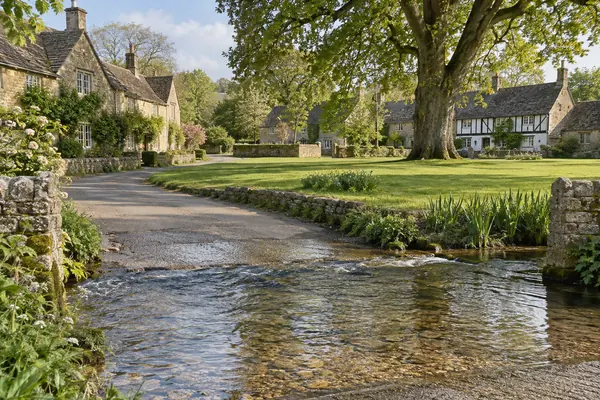
Some describe the landscape, like Hill, Ford or Green (a village green). Others come from a named town or farm, such as Burford. Locative names are very common in England but rare in Ireland.
Read moreFAMILY
Jackson and Jenkinson began as a father's name. Gaelic Mac meant 'son of' and Ó 'grandson of', and Welsh ap turned Thomas ap Howell into Thomas Powell.
Trace your ownWHEN DID NAMES STICK?
Pick a group. The value says roughly when passing a surname down the family became usual. The longer the bar, the earlier it happened.
Dates are broad estimates from surname historians. The change was gradual and varied by place and social class.
TWO NUMBERS WORTH KNOWING
One figure for the problem,
one for the research.
≈ 50%
Share called John in some medieval records
The Normans used fewer first names than the English had before. Dr Harry Parkin says some medieval records show 50% of people called John, so a second name was needed to tell people apart.
MEDIEVAL RECORDS · UNIVERSITY OF CHESTER
45,600 names
Family names explained in the largest UK study
A four-year study explained the most frequent family names in Britain and Ireland. Nearly 40,000 are native, and the rest reflect people who settled from the sixteenth century onwards.
OXFORD DICTIONARY · UWE BRISTOL, 2016
The dictionary covers every surname with more than 100 current bearers, including names such as Patel, with 101,463 bearers in 2011, and Li, with over 9,000.
LOOK UP YOUR OWN NAME
Surname origins can be surprising, and older explanations are sometimes wrong. These steps follow how the researchers describe their dictionary.
The Oxford Dictionary of Family Names in Britain and Ireland is free through public libraries that buy it, and you can ask your library to request it.
Each entry gives the name's main location and how common it was in 1881 and today, which can point to a home region.
Ask whether it looks like a job, a place, a parent's name or a description. Then check the entry, because spellings drift.
Short may be an ironic nickname for a tall person, and Twelvetrees is thought to be an altered form of a Yorkshire place-name.
WHY IT TOOK SO LONG
Before 1066 it was very rare in England to be recorded with more than one name. Afterwards, people gained bynames: descriptions that were not passed on, so one person might have two. A 1221 Worcestershire record names 'Ricardus filius Walteri, de Cliue': Richard, son of Walter, of Cleeve.
Some bynames were passed down and became surnames; others died out. Anyone called Shepherd today probably had a shepherd ancestor somewhere, but names stayed after the trade was gone. Some names even turned out to be rude, says Parkin, ones people would hardly have chosen for themselves.
Questions
Hereditary surnames came in gradually after the Norman Conquest of 1066, first among wealthy landholders. Most authorities agree they were usual in the south of England by about 1350 and in the north by about 1450.
Researchers use four broad groups: locative names from places or landscape features, occupational names, relationship names based on a parent, and nicknames describing the first bearer.
Wales used a patronymic system, X ap Y, much longer than England. When settled surnames spread from the mid-sixteenth century, many families took a father's first name, often with an English -s, giving names like Jones and Williams.
Yes. In Gaelic names Mac means 'son of', and in Irish names Ó means 'grandson of', as in Mac Cárthaigh, 'son of Cárthach', the root of McCarthy.
The Oxford Dictionary of Family Names in Britain and Ireland, from the University of the West of England project, covers names with more than 100 current bearers. It is free through public libraries that subscribe.
Sources
ABOUT THIS NAME
doodlemyname.com is part of the DoodleSale portfolio. It isn't in an auction right now, but you can ask about leasing it.